
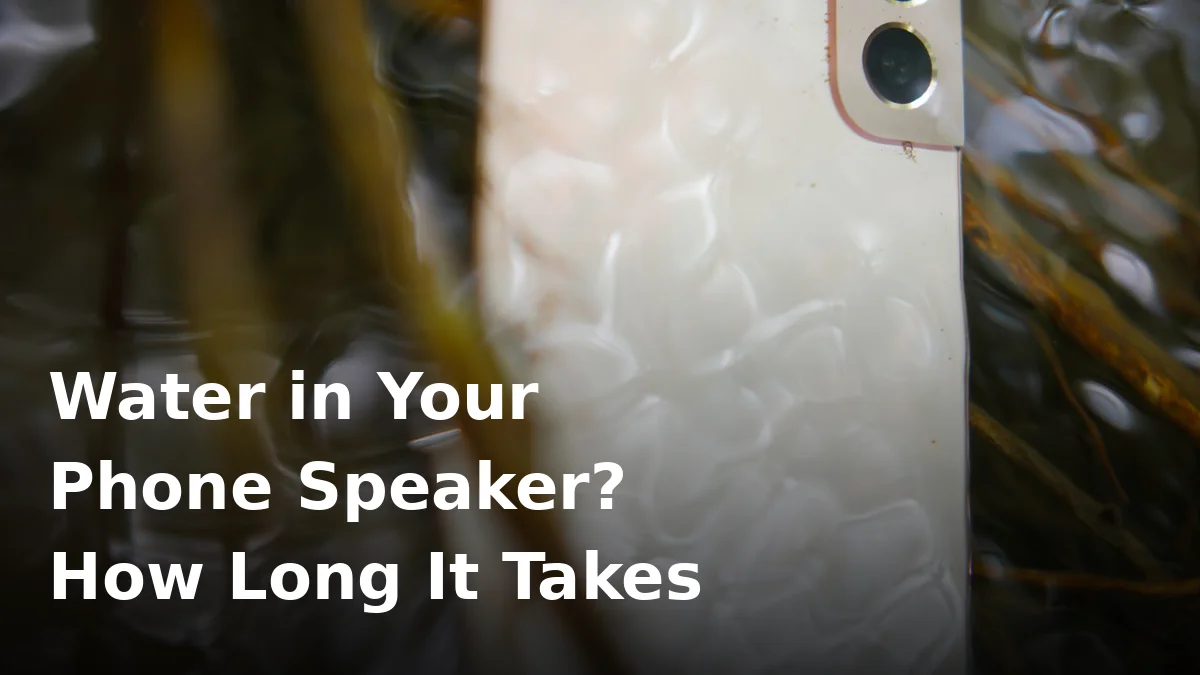
You dropped your phone in water — or got caught in the rain, or it took a splash by the pool — and now the speaker sounds like it’s playing from inside a fish tank. The first question everyone asks is: how long will this last? The honest answer is that it depends. It can be minutes, or it can be days. Here’s what actually determines the drying time, and how to make it as short as possible.
The short answer: anywhere from minutes to 48 hours
A few droplets in the speaker grille can clear in minutes, especially with the help of a water-eject tone. A proper dunking, where water gets past the grille mesh and into the speaker chamber, typically takes several hours to a full day or two of drying. If the phone was submerged for a while, plan on 24–48 hours before the sound is fully back to normal.
The key thing to understand: the muffled sound is water physically sitting on or around the speaker membrane, dampening its vibration. The sound improves as the water leaves — there’s no fixed timer, and the speaker isn’t “broken” while it sounds dull. Patience is part of the fix.
What affects how long it takes
How much water got in. A splash on the grille is a surface problem and clears fast. Submersion pushes water past the mesh into the chamber behind it, where it has to evaporate out through tiny openings — much slower.
Fresh water vs. salt or chlorinated water. Fresh water just needs to dry. Salt water and pool water leave residue behind even after drying, which can keep the sound dull and cause corrosion. If salt or chlorine was involved, the drying time matters less than dealing with the residue properly.
Temperature and airflow. Warm, moving air dries things faster. A phone sitting in a cool, humid bathroom dries far slower than one in a warm room with a fan nearby. (Warm air, not heat — more on that below.)
Whether you help it along. Doing nothing and waiting works eventually, but active steps — water-eject tones, positioning the phone speaker-down, gentle shaking — can cut the time dramatically.
The phone’s water resistance. Ironically, a good IP68 seal slows water exit as well as entry. Once water gets past the seals of a water-resistant phone, it can take longer to escape than it would from a phone with no sealing at all.
How to get the water out faster (safely)
- Power off Bluetooth accessories so any tones play through the phone’s own speaker.
- Hold the phone speaker-down and shake it gently. Gravity plus a few firm shakes dislodge the bulk of the water in seconds. Don’t fling it wildly — gentle but firm.
- Play a water-eject tone for 30–60 seconds. Low-frequency sound physically vibrates water out of the speaker chamber. Repeat 2–3 times, shaking between rounds. You can run one right now on our free speaker cleaner.
- Pat the speaker area dry with a soft, lint-free cloth.
- Leave the phone in a warm, ventilated spot, speaker facing down, for several hours. A room with a fan running is ideal.
- Wait before charging. If water got anywhere near the charging port, let the phone dry for several hours first — charging a wet port is how corrosion starts.
Most people see major improvement after steps 2–3 alone. The rest is just giving the last traces of moisture time to evaporate.
Mistakes that make it take longer (or make it worse)
- Putting it in rice. Rice is barely absorbent, rice dust gets into the speaker mesh and charging port, and a sealed bag of rice blocks the airflow that actually does the drying. Plain air circulation beats rice every time.
- Using a hair dryer or radiator. Heat can warp the speaker membrane, damage the battery, and melt adhesives. Warm room air is fine; directed heat is not.
- Charging too soon. If the port is wet, charging causes corrosion on the contacts. Wait until everything is dry.
- Playing music at max volume to “blast it out.” Sustained max-volume playback on a water-dampened speaker stresses the membrane. Short water-eject tones are designed for this; your playlist is not.
- Assuming it’s fixed because it sounds better. If the sound improved but isn’t quite right after 48 hours, there may be residue or corrosion starting — especially with salt water. Don’t ignore a speaker that’s still slightly off.
When to start worrying
Give it 48 hours of proper drying. If after that the speaker still sounds muffled, distorted, or significantly quieter than before the incident, something beyond simple trapped water is going on — likely residue on the membrane or early corrosion. At that point, a repair shop can open the phone and clean or replace the speaker properly. Don’t keep blasting tones at a speaker that isn’t improving; if two days of drying didn’t fix it, more vibration won’t either.
One more thing: if the phone won’t turn on at all, this is no longer a speaker problem. Power it down completely, don’t try to charge it, and get it to a repair shop. Water inside the electronics is a different and more urgent issue.
Frequently Asked Questions
How long does water stay in a phone speaker?
Anywhere from a few minutes to 48 hours. Light splashes often clear within minutes, especially with a water-eject tone. A full dunking typically needs several hours to two days of drying before the sound is fully normal.
Will the water come out on its own?
Yes, eventually — trapped water evaporates on its own given time and airflow. But active steps (shaking the phone speaker-down, playing water-eject tones, good ventilation) clear it much faster than just waiting.
Does putting my phone in rice help dry the speaker?
No, and it can make things worse. Rice is a poor desiccant, rice dust gets into the speaker mesh and charging port, and a sealed container blocks the airflow that actually dries the phone. Open air in a warm room works better.
Can I use a hair dryer to dry my phone speaker?
Not recommended. The heat can damage the speaker membrane, battery, and internal adhesives. If you want airflow, use a fan at room temperature — it’s safer and surprisingly effective.
My speaker still sounds muffled after 2 days. Is it broken?
Possibly damaged, or there may be salt/mineral residue left behind. If it was salt water or pool water, residue is the likely cause. Either way, after 48 hours of proper drying with no improvement, it’s time for a professional repair assessment.
Don’t just wait it out
Time alone will dry a speaker eventually, but a few minutes of active effort gets you there far sooner. Run a water-eject tone on our free tool now — it takes two minutes, and you’ll usually hear the difference immediately.

One Comment
Comments are closed.