It seems like the obvious fix. Your phone speaker is full of dust, you have a can of compressed air in the drawer, and a quick blast should blow the grille clean. Computer keyboards get this treatment all the time, so why not a phone?
The honest answer is: do not do it. Canned compressed air is one of the riskiest things you can aim at a phone speaker. It can push dust and moisture deeper into the phone, chill and crack delicate parts, and leave a chemical residue on the mesh. The speaker grille is not a keyboard — it is a fine mesh over a fragile diaphragm, millimetres from electronics that do not tolerate being blasted. Here is why, and what to use instead.
What canned air actually is
A can of “compressed air” does not contain ordinary air. It contains a liquefied gas — usually a fluorocarbon propellant — held under pressure. When you press the nozzle, the gas rushes out at high speed and very low temperature. That is why the can gets cold in your hand, and why tilting it can spray visible liquid. Three properties of that blast cause the problems for phone speakers: the pressure, the cold, and the propellant itself.
A keyboard can take a blast because its keys are large, the gaps are wide, and there is nothing delicate directly behind them. A phone speaker grille is the opposite: tiny holes, a thin mesh, and immediately behind it a diaphragm thinner than a sheet of paper, plus the microphone and other components sharing the same cramped space. Force that belongs on a keyboard does not belong there.
The three ways canned air harms a speaker
It drives debris inwards, not out. A speaker mesh is designed to keep dust out. A high-pressure blast does not lift dust off the surface; it forces particles through the mesh and into the speaker cavity, where they sit on the diaphragm and rattle. Dust that was a muffled sound becomes a buzz that no cleaning tone can shift. The same happens with moisture: if the speaker is even slightly damp, a blast pushes water deeper into the phone instead of out of it, which is why our guides to getting water out of a phone speaker and salt water in a speaker never recommend blowing into the grille.
It can freeze and crack things. The gas leaves the can far below room temperature. A sustained blast can chill the mesh and the diaphragm suddenly, and the rapid temperature change can stress adhesives and coatings. Spraying liquid propellant directly onto the mesh — easy to do if the can is tilted or shaken — leaves a residue that can stain or stiffen the mesh as it evaporates. This is the same reason camera repair guides warn against canned air on sensors: the “cleaning” leaves its own marks behind.
It can damage the diaphragm and seals. A phone speaker diaphragm moves a fraction of a millimetre when it plays sound. A jet of gas at close range pushes it far beyond that range, and can deform it or tear the surround that holds it in place. The seals around the speaker, which help keep water and dust out of the phone, can also be disturbed by a blast aimed at the grille edge. Damage like this does not announce itself immediately — the speaker just sounds slightly worse, slightly distorted, and the cause is never traced back to the can.
None of this means a single short, distant puff will definitely destroy your phone. It means the risk is real, the benefit is small, and there are safer tools that do the same job better. Phone manufacturers’ own cleaning guidance consistently says the same thing in different words: use a soft cloth, a soft brush, and nothing forced into the openings.
What about a hand blower bulb?
A rubber blower bulb — the kind sold for camera lenses — is a different story. It moves ordinary room-temperature air at far lower pressure, with no propellant and no freezing. A few gentle squeezes from a few centimetres away, with the phone speaker-side down, can dislodge loose surface dust without forcing it through the mesh. It is the safest air-based option, and the only one worth using on a phone.
Even a blower bulb has limits. It will not shift dust that is pressed into the mesh, it will not remove sticky residue, and it will not help a wet speaker — air blown at a wet mesh just moves the water around. Use it as a first pass for loose dust, then move on to the methods below. If you do not own a blower bulb, skipping this step entirely costs you nothing.
Safer ways to clean a phone speaker
The methods that actually work are gentler than a blast, and they are the ones our cleaning guides rely on:
- A soft, dry brush. A clean, soft-bristled toothbrush, brushed lightly across the grille, lifts surface dust without pushing it inwards. Brush outwards, use almost no pressure, and keep the phone speaker-side down so loosened dust falls away. Full instructions are in our guide to cleaning a phone speaker.
- A cleaning tone. A low-frequency tone vibrates the mesh from the inside, shaking loose dust and water that a brush cannot reach. Run the free speaker cleaner in short cycles with the speaker pointing down, and listen after each one. Our guide to speaker cleaner frequencies explains which tone to use and why.
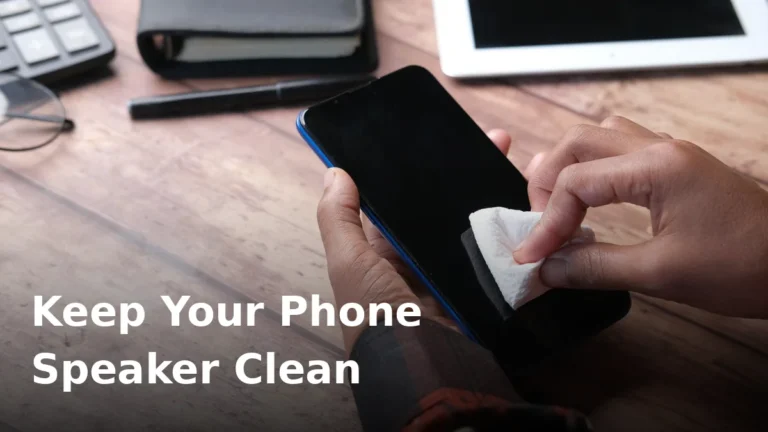
- A soft cloth for the surrounding area. Wipe the phone body and the area around the grille with a dry microfibre cloth. This stops dust sitting next to the grille from migrating back in the moment you put the phone down.
- Tape, used with care. A loop of low-tack tape dabbed lightly on the grille can pick up surface lint. Press gently, lift straight off, and never use strong tape or press hard — the mesh can tear, and adhesive residue is its own problem. If in doubt, skip this one and stick to the brush and tone.
What never to use: pins, needles, toothpicks, SIM tools, cotton buds pushed into the grille, vacuum cleaners, and — as above — canned air. Anything that enters the holes risks the mesh and the diaphragm behind it. If the speaker still sounds muffled or crackly after the gentle methods and a proper drying period, the blockage is below the mesh, and a repair shop’s ultrasonic or professional clean is the right next step — not a harder blast.
I already used canned air — what now?
Do not panic. One brief blast from a distance often does no lasting harm, especially if the phone still sounds the same afterwards. Stop using it, and check the speaker: play music at a moderate volume and listen for new buzzing, rattling or distortion that was not there before, and run a phone speaker test to check both speakers. If the sound is unchanged, you have most likely got away with it. If a new buzz or distortion has appeared, or the speaker sounds worse than before the blast, switch the phone off, let it sit, and get it inspected rather than trying to blast the problem away — repeated blasts are what turn a minor incident into real damage.
Frequently Asked Questions
Can I use compressed air on my phone speaker?
No — canned compressed air can force dust and moisture through the mesh, chill and crack delicate parts, and leave propellant residue. Use a soft brush and a cleaning tone instead.
What is the difference between canned air and a blower bulb?
Canned air is pressurised propellant gas that exits freezing cold and can spray liquid. A blower bulb moves ordinary room-temperature air at low pressure, which is far gentler and safe for loose surface dust.
Can compressed air damage a phone speaker permanently?
It can deform or tear the diaphragm, push debris onto it, or disturb the seals around it. Damage is not guaranteed from one puff, but the risk is real and the benefit is small compared with safer methods.
How should I clean dust out of a phone speaker grille?
Brush lightly with a soft dry brush, run a low-frequency cleaning tone with the speaker pointing down, and wipe around the grille with a dry microfibre cloth. Never poke anything into the holes.
Is it safe to use a vacuum cleaner on a phone speaker?
No. A vacuum creates strong suction that can stress the diaphragm and pull the mesh, with the same inward-force problem as canned air in reverse. Stick to the brush and tone.
My speaker buzzes after I used canned air. What should I do?
Stop using the can, run a cleaning tone once to see if the buzz clears, and if it persists after the phone is dry, get the speaker inspected. Do not blast it again.
Try it now
Put the can back in the drawer and reach for the brush instead. Run the free speaker cleaner with the speaker pointing down, brush the grille gently, and give the phone time — the gentle methods clear more dust, with none of the risk.