
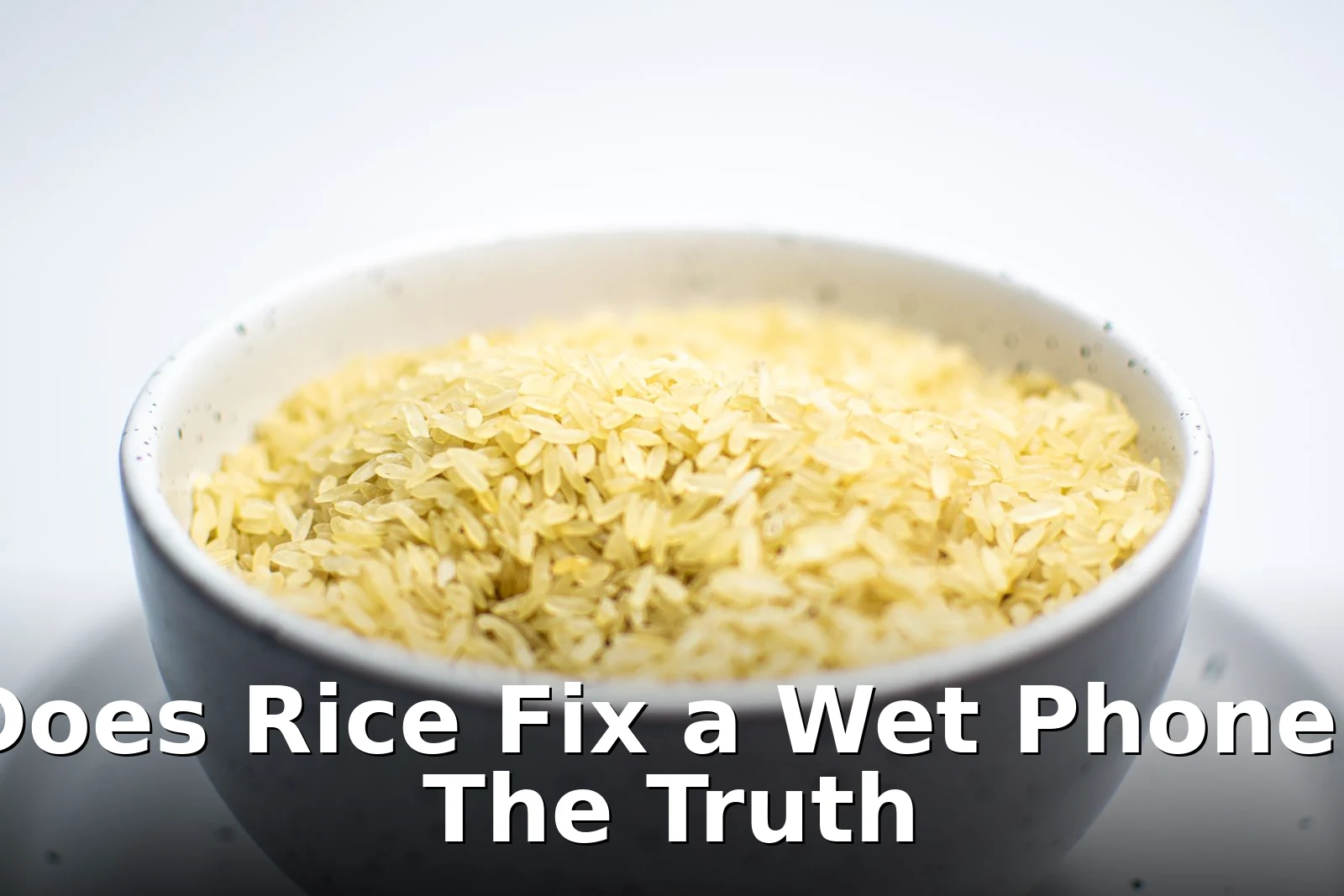
Where the rice advice came from
The rice trick dates back to the era of removable batteries and unsealed phones, when any drying help beat nothing. It stuck around because it feels like folk wisdom — and because “do something” beats “do nothing” when your phone just took a swim. But phones changed, and the evidence caught up.
What the tests actually show
iFixit and others have tested this directly: uncooked rice dries a wet phone about as well as leaving it on the counter. The difference is marginal — rice is a mediocre desiccant at best. In controlled comparisons, silica gel packets dramatically outperform rice, and a fan blowing room-temperature air over the phone beats both for surface moisture.
So rice isn’t useless — it’s just barely better than doing nothing, while better options are sitting in your junk drawer.
Why rice can make things worse
This is the part the folk wisdom misses:
- Starch dust gets inside. Rice sheds fine starch powder. Repair technicians regularly find rice dust caked inside “water-damaged” phones — coating the logic board, clogging the speaker mesh you’re trying to save, and gumming up the charging port. You’ve traded water damage for dust damage.
- It delays real action. The hours your phone sits in rice are hours that corrosion is eating the logic board. Speed matters more than method — every hour counts with water inside a phone.
- It gives false confidence. “It’s in rice, it’ll be fine” stops people from doing the things that actually help: powering off immediately, not charging, getting airflow to the device.
What to do instead (ranked)
- Power off immediately. Electricity + water = corrosion and shorts. This is the single most important step.
- Don’t charge it. Not to “test if it works.” Charging a wet phone is how you turn a drying problem into a dead phone.
- Remove the case, shake out water gently (speaker facing down), pat dry with a lint-free cloth.
- Sound-eject the speakers. Run a water-eject tone with the speaker facing down — it physically pushes droplets out of the grille in under a minute. This is the fastest thing you can do for the speakers specifically.
- Airflow. Stand the phone upright in front of a fan (room temperature, not a hair dryer — heat damages batteries and screens). 24–48 hours.
- Silica gel if you have it. Those little packets from shoe boxes and pill bottles actually absorb moisture far better than rice. Seal the phone in a bag with several packets.
The one situation where rice is fine
Mild surface moisture — you splashed the phone, wiped it off, everything works. Tossing it in rice overnight as extra insurance won’t hurt anything. Just don’t treat it as a treatment for a genuinely soaked phone.
Salt water and pool water: act faster
Fresh water is bad; salt and chlorinated water are worse — they corrode metal contacts fast. If your phone went in the sea or a pool and still powers on, the priority is getting it to a repair shop quickly for professional cleaning. Rice definitely won’t save this one.
Frequently asked questions
How long should I leave my phone in rice?
The honest answer: don’t bother for a soaked phone — use the steps above instead. If you insist, 24–48 hours is the folk recommendation, but the evidence says airflow beats it.
Is silica gel really better than rice?
Yes, substantially. Silica gel is an engineered desiccant; rice is a grain that happens to absorb a little moisture. Side-by-side tests aren’t close.
Can rice damage my phone?
The starch dust can clog speaker meshes and coat internal components. It’s not guaranteed damage, but it’s a real and documented downside.
My phone works fine after rice — does that mean it worked?
Probably means the water exposure was mild enough that the phone would have survived anyway. Correlation, not causation.
Wet speaker specifically? Skip the rice — run the water-eject tone and push the water out in under a minute.

7 Comments
Comments are closed.